Geraldine’s Recipes

Thai Coconut Prawn and Fish Soup

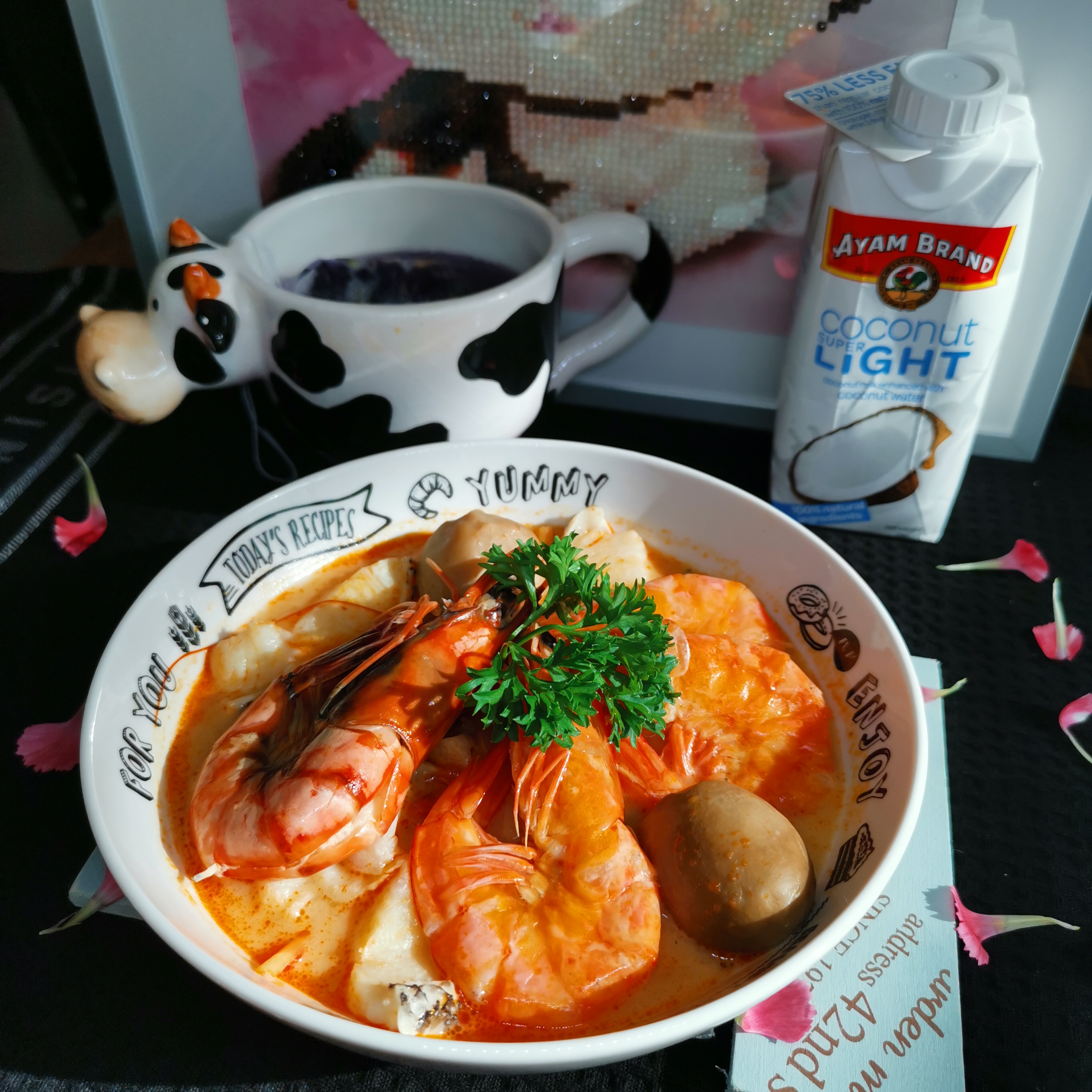
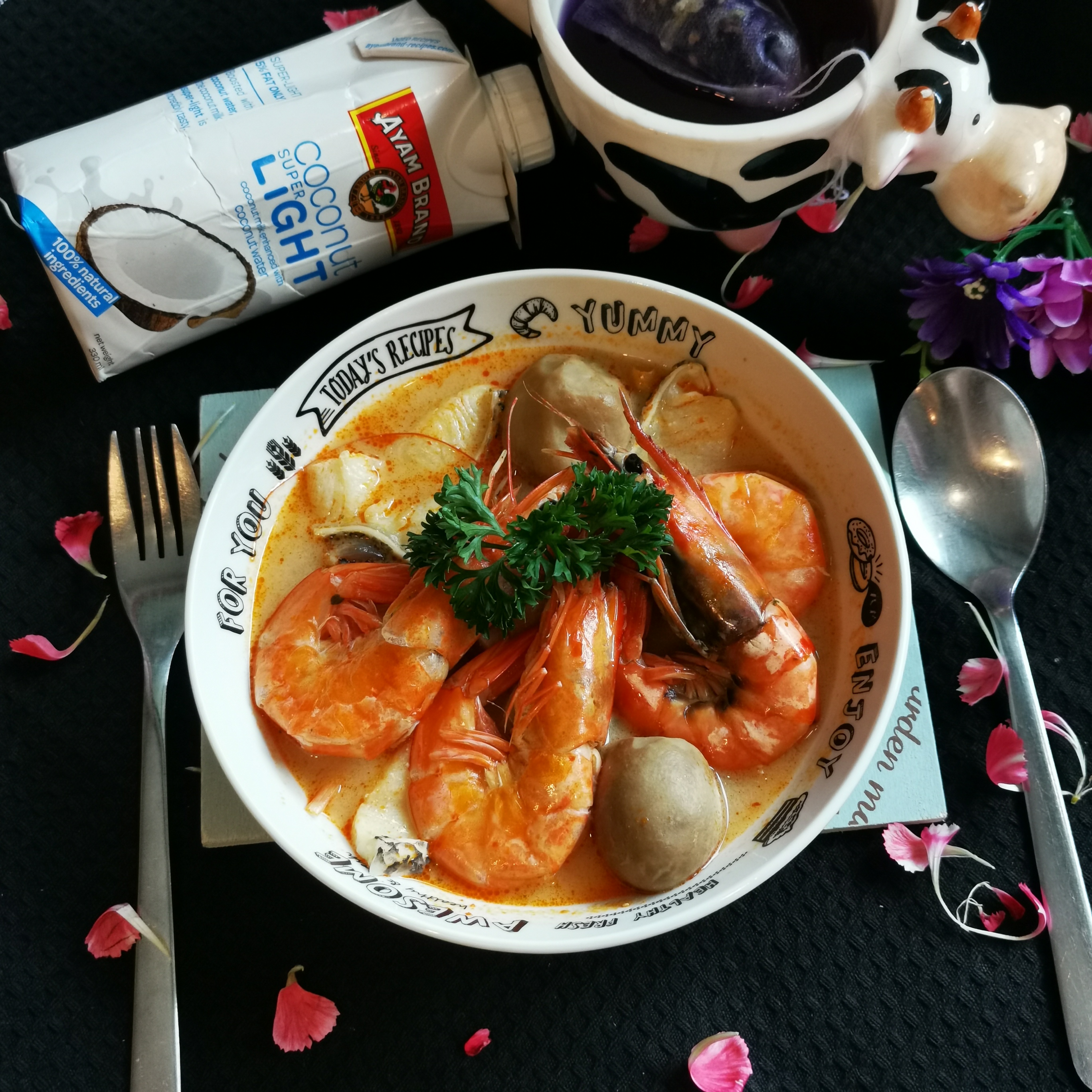
A delicious meal awaiting at my dinner table

I have always been a huge fan of this soup. I still remember the first time I had this soup more than two decades ago at Tokyo Training Center when I was a trainee in Japan sponsored by AOTS. Their canteen served this soup, and being a fan of seafood, I ordered and tried it out. Yes, I was hooked. The level of spiciness is not too much, just a little tang and a note of sweetness that ended with a nutty taste of coconut. It was a very rich soup that is full of flavours.

Now that Ayam brand had the light version of coconut milk, with only 5 percent fat and yet still flavourful, I was so ecstatic to cook it again without feeling the guilt! Yahoo!

Ingredients

  • 660g Ayam Coconut Light (5% fat)
  • 40g chopped and split Lemongrass
  • 24g chopped shallots
  • 12g chopped green chili
  • 38g galangal ginger
  • 95g squeezed lime juice
  • 50g red curry paste
  • 40g fish sauce
  • 1L chicken broth
  • 400g cod fish fillet (or any of your preferred fish)
  • 500g deveined prawn with shell
  • 1 can straw mushroom (drained)

Method

  • Heat up your pot and drizzle 10g of oil then sauté your curry paste, lemon grass, shallots, ginger and green chili for about 2-3 minutes to release the fragrance of the spices.
  • Add the chicken broth, lime juice and Ayam coconut milk; bring to boil.
  • Lower the heat before adding the prawn and fish fillet then let it simmer until the seafood are cooked.
  • Season it with fish sauce.
Steaming hot soup ready to be served!

The aroma permeating in my kitchen was making everyone at home hungry. Who wouldn’t be, right?


Puto or Filipino Steamed Rice Cake

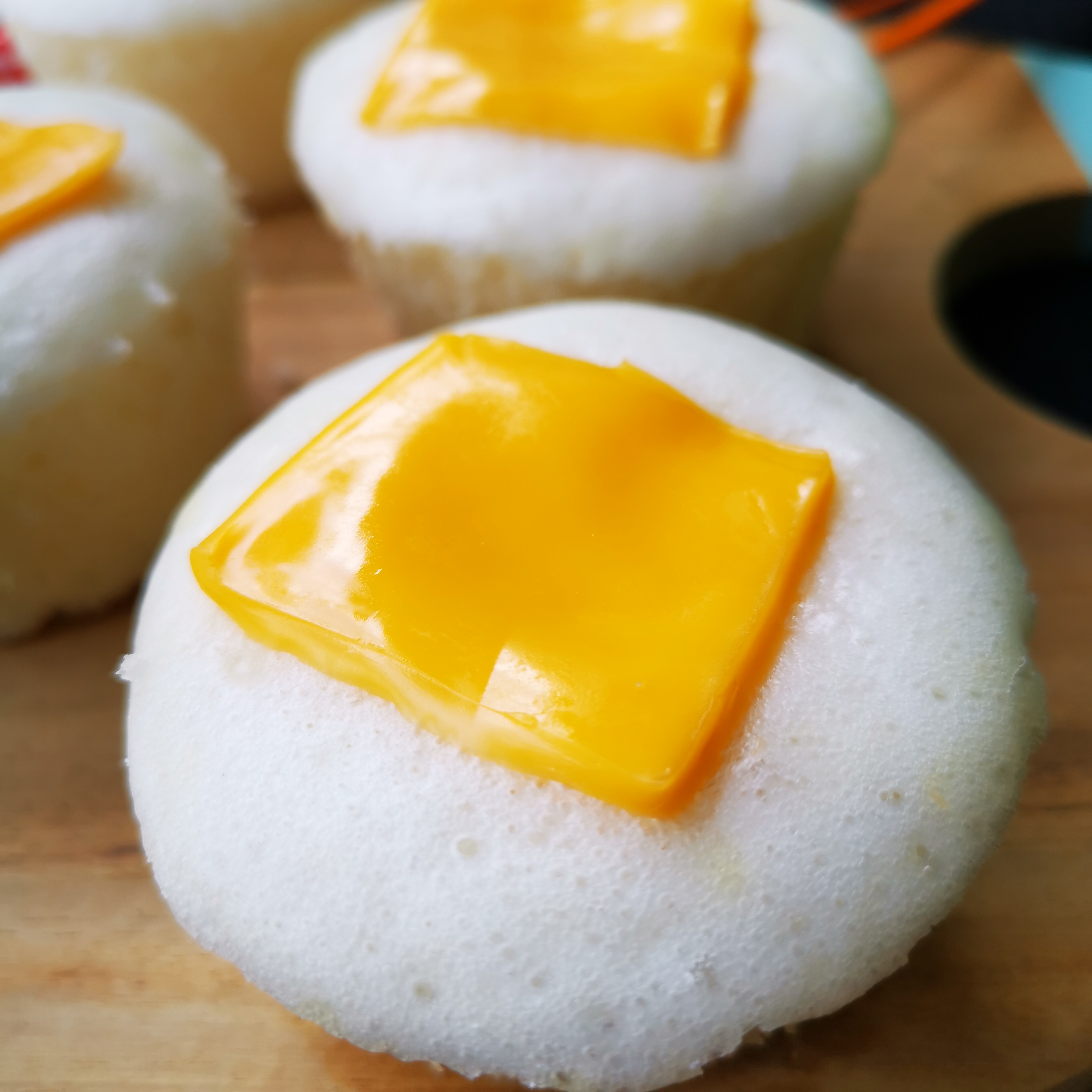
Fluffy puto

Puto is a famous traditional snack from the Philippines. It is a sweet steamed rice cake traditionally made from slightly fermented dough. I have been wanting to do it for a while but was worried that I might fail. But this week, I finally gathered my courage and tried it out. Turns out, I was quite pleased with the results.

So these are the things you need to make the Dough: rice flour, distilled water and a clean covered clear jar. I started the fermentation last Monday night ( May 20). Weigh out 10g of rice flour and 10g of water, put it into the jar, mix thoroughly, then cover the jar. Leave it overnight at room temperature which is about 25-27 degree celsius.

The next morning which for me was Tuesday May 21, about 12 hours after the last time you made the paste. Add another 20g rice flour and 20g water, mixed thoroughly with the paste. This is called ‘feeding, and it helps to make the yeast stronger’. Cover and set aside at room temperature 25-27 degree celsius.

At night, after 12 hours from the last feeding, I discarded half of the mixture, leaving only 30g. Discarding is to limit the quantity of your paste unless you intend to make a huge batch. Now with this 30g, add 30g of rice flour and 30g of water. Mix thoroughly then set aside and leave it overnight at room temperature at 25-27 degree celsius.

The following morning which was Wednesday May 22, you should see visible signs of fermentation, like bubbles. Look at the sides of your jar, you should also be able to see a few bubbles. Feed the fermented paste with 90g water and 90g rice flour. You should end up with a total of 270g. As you mix, you can begin to feel that the paste becomes sort of airy. After 8 hours you should be able to see more bubbles, especially when you look at the sides of the jar. It may not rise too much as the yeast are not very active yet, however it has sufficient strength to make Puto. Now it is time to prepare the ingredients!

Ingredients

  • 230g Fermented Rice Flour mixture
  • 10g double acting baking powder
  • 45g fine Sugar
  • 2g coconut extract

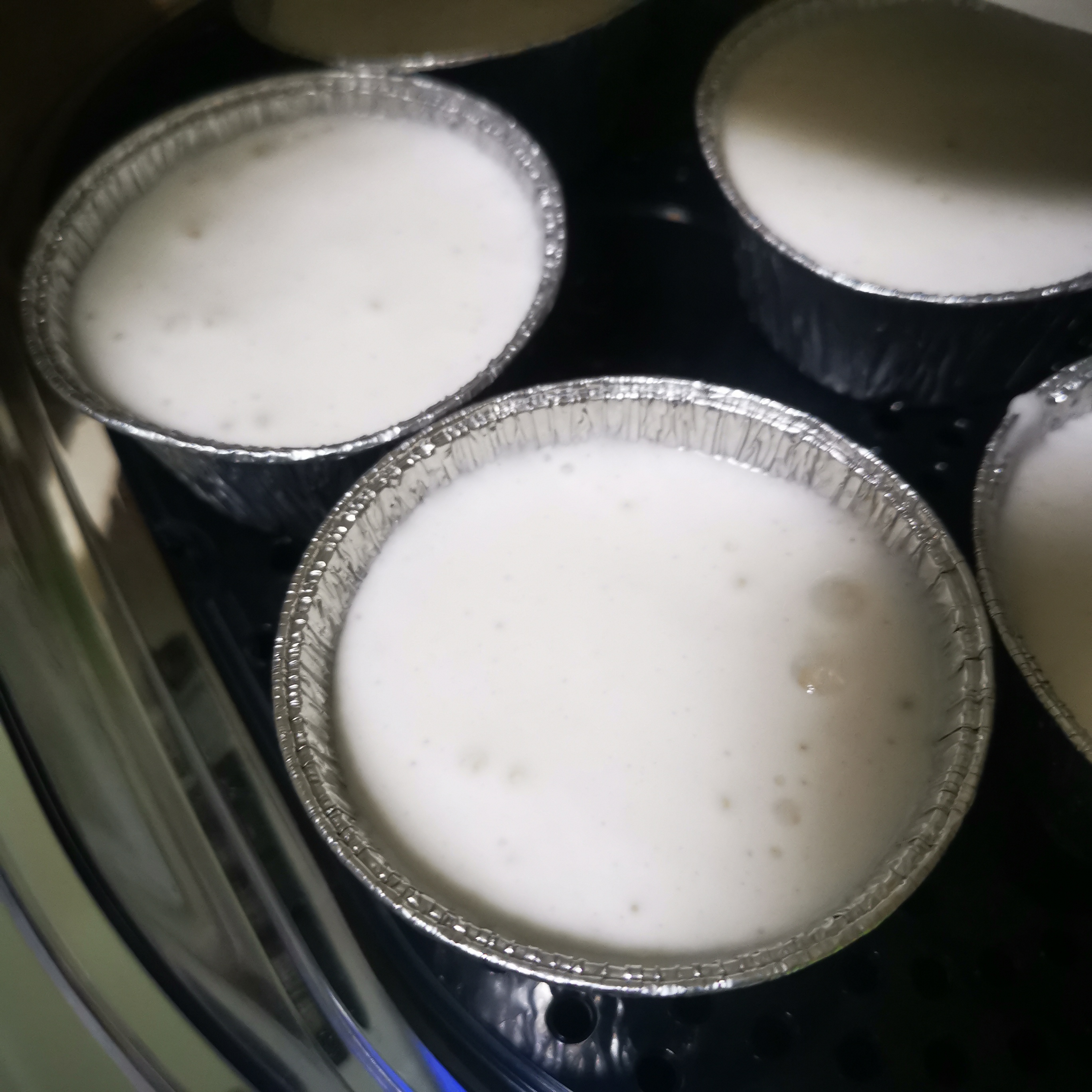
Mix all the ingredients gently using a whisk. You have to preserve as much of the air in the batter. Transfer the mixture to oiled tins. Use coconut oil. Then steam immediately on high heat.

My tins are a bit tall, so the steaming time was about 25 minutes. Please adjust accordingly if you’re using smaller tins. You can use a skewer to poke a hole through the center and check if it comes out clean. This means that the Puto is ready. At the last 5 minutes of steaming you may want to add slices of cheese on top.

Can you see the tiny air bubbles that still remains after steaming??
Fluffiness in every bite
Jiggly Jiggly like Jello

Hope you will enjoy the recipe! Hasta La Vista.

1 66 67 68 73